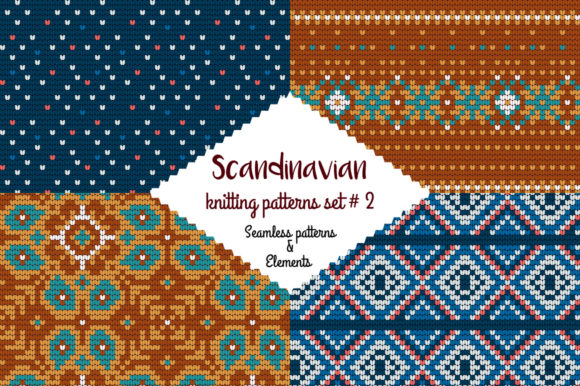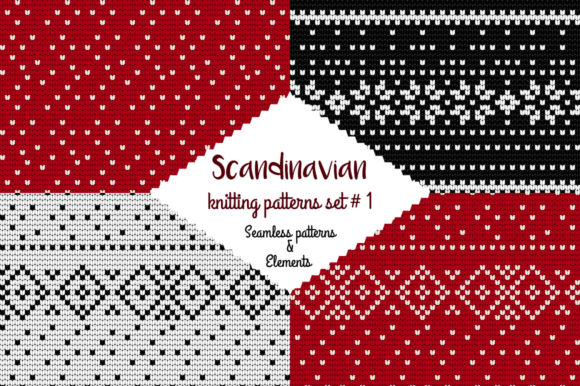
30 Scandinavian Knitting Patterns 3: A Resource for Designers and Creators
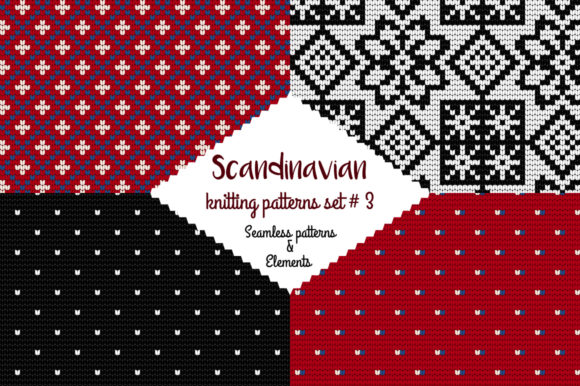
The 30 Scandinavian Knitting Patterns 3 is a curated collection of knitting motifs designed to inspire and support creative projects in the textile and design industries. Rooted in the minimalist, functional, and elegant aesthetic of Scandinavian design, these patterns offer a versatile toolkit for anyone looking to incorporate traditional craftsmanship into modern applications. Whether you're a designer working on packaging, a small business owner creating custom textiles, or an independent creator exploring new ways to express your craft, this resource can be a valuable addition to your workflow.
Understanding the Value of Scandinavian Knitting
Scandinavian knitting has long been associated with simplicity, clean lines, and a deep respect for material and form. These qualities make it an ideal choice for designers seeking to create visually appealing yet understated designs. The 30 Scandinavian Knitting Patterns 3 builds on this legacy by offering a wide range of textures and shapes that can be adapted to various mediums, from wrapping paper to fabric prints.
These patterns are not just decorative elements; they are functional tools that can enhance the visual appeal and usability of your work. By integrating them into your design process, you can add a layer of cultural authenticity and artistic depth that resonates with a broad audience.
How to Use the Patterns in Your Workflow
The 30 Scandinavian Knitting Patterns 3 can be used at different stages of a project. For instance, during the planning phase, they can help you visualize how your design will look when printed or woven. When working on a prototype, they can serve as a guide for texture and pattern placement. Even after the final product is complete, they can be used as reference materials for future projects or as part of a brand identity system.
One of the key strengths of this collection is its versatility. Each pattern is designed to be scalable and adaptable, making it suitable for both digital and physical applications. Whether you're using them as background elements, border accents, or standalone designs, they can be customized to fit your specific needs.
Integration with Other Design Tools
To maximize the utility of the 30 Scandinavian Knitting Patterns 3, consider how they can be integrated with other design resources. For example, if you're working on a branding project, you might use these patterns as part of a color palette or as repeating elements in your logo design. If you're a graphic designer, you could pair them with vector illustrations or typography to create cohesive compositions.
Additionally, the collection includes a set of high-resolution JPGs that are optimized for print and digital use. This makes them compatible with a wide range of software, including Adobe Illustrator, Photoshop, and InDesign. You can also export them in various formats to ensure they meet the technical requirements of your target platforms.
Practical Implementation Tips
When incorporating the 30 Scandinavian Knitting Patterns 3 into your workflow, there are several best practices to keep in mind. First, take the time to explore the full range of patterns available. Each one offers unique characteristics that can be leveraged in different ways. Consider how each pattern interacts with the colors and textures you're working with, and think about how they can complement or contrast with other design elements.
Second, organize your files in a way that makes them easy to access and use. Create folders for different types of patterns, such as borders, backgrounds, and standalone elements. Labeling your files clearly will save you time and effort in the long run. Additionally, keeping a digital archive of your work ensures that you can revisit and reuse these patterns whenever needed.
Third, experiment with different combinations of patterns and colors. The 30 Scandinavian Knitting Patterns 3 includes a set of three color options—red, blue, and black—that can be used as a base for your designs. However, you may also want to test how these patterns interact with other color schemes to see what works best for your project.
Workflow Examples
- Wrapping Paper Design: Use a seamless pattern from the collection as a base for your wrapping paper. Add subtle variations in texture and color to create a unique, eye-catching design.
- Textile Print: Incorporate a pattern swatch into a larger textile print. This can help create visual interest while maintaining a cohesive overall look.
- Brand Identity: Use a pattern as a recurring element in your branding materials, such as business cards, letterheads, or website backgrounds.
- Product Packaging: Apply a pattern to product boxes or labels to add a touch of elegance and sophistication to your packaging design.
Each of these examples demonstrates how the 30 Scandinavian Knitting Patterns 3 can be seamlessly integrated into a variety of design workflows. The key is to approach each project with a clear vision and a willingness to experiment.
Quality and Long-Term Use
The quality of the 30 Scandinavian Knitting Patterns 3 is one of its most significant advantages. The high-resolution JPGs are designed to maintain clarity and detail even when scaled up or down. This ensures that your final output will look professional and polished, regardless of the medium you choose.
In terms of long-term use, the collection is built to be a reliable resource. As your design projects evolve, you can return to these patterns as a source of inspiration or as a tool for consistency. They are also well-suited for ongoing creative exploration, allowing you to develop new ideas and refine your approach over time.
Additionally, the inclusion of a swatches palette provides a visual reference for how the patterns look in different color contexts. This can be especially helpful when working on complex designs that require careful consideration of color harmony and contrast.
Conclusion
The 30 Scandinavian Knitting Patterns 3 is more than just a collection of images—it's a powerful resource that can enhance your design process and elevate the quality of your work. By understanding how to integrate these patterns into your workflow, you can unlock new creative possibilities and achieve greater efficiency in your projects.