Organic Turing Patterns: A Versatile Design Resource for Creative Projects
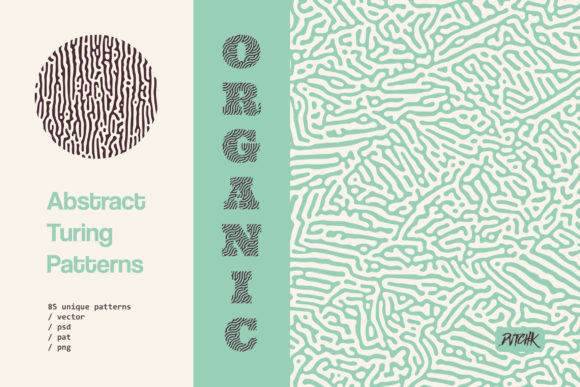
Organic Turing Patterns is a collection of 85 unique, tileable abstract seamless patterns designed to offer a fresh and artistic approach to visual design. These patterns are inspired by the mathematical concept of Turing patterns, which are self-organizing structures that emerge from simple rules. However, rather than being strictly scientific, these designs have been adapted into a visually appealing format suitable for a wide range of creative applications.
The pack includes vector files in .ai and .eps formats, along with a .psd file containing vector shapes and .pat files for easy use in design software. Each pattern is available as a transparent .png and comes in a pixel dimension of 1500x1500 at 300 dpi resolution, ensuring high-quality output for both print and digital use.
Why Organic Turing Patterns Might Interest You
If you're a designer, developer, or content creator looking for unique and versatile background elements, Organic Turing Patterns could be a valuable addition to your toolkit. These patterns are not only aesthetically pleasing but also highly functional, offering a way to add depth and interest to various design projects without requiring complex creation processes.
One of the primary reasons people might find this resource useful is its versatility. The patterns can be used as website headers, YouTube thumbnails, Facebook and Instagram ad backgrounds, mobile and desktop wallpapers, or even integrated into larger compositions. This adaptability makes them suitable for a broad spectrum of design needs, whether you're working on branding, web development, or social media content.
Additionally, the inclusion of multiple file formats ensures compatibility with different design tools and platforms. Whether you're using Adobe Illustrator, Photoshop, or other graphic design software, you'll find the necessary files to work seamlessly with these patterns.
Benefits and Considerations
One of the key benefits of Organic Turing Patterns is their ease of use. Since they are already pre-designed and tileable, there's no need for extensive customization or technical expertise. This makes them an excellent choice for designers who want to quickly incorporate sophisticated visuals into their projects without spending significant time on creation.
Another advantage is the variety provided by the 85 unique patterns. This diversity allows users to experiment with different aesthetics and find the perfect fit for their specific project requirements. The seamless tiling feature also ensures that the patterns can be used without visible repetition, making them ideal for large-scale applications like website backgrounds or app interfaces.
However, it's important to consider potential trade-offs. While these patterns offer convenience and creativity, they may not always provide the level of customization required for more specialized design needs. If your project requires intricate modifications or unique elements not covered by the existing patterns, you may need to explore additional resources or create custom designs.
Furthermore, the effectiveness of these patterns depends on how well they align with the overall design aesthetic of the project. It's essential to evaluate whether the organic, abstract nature of the patterns complements the intended message or brand identity. In some cases, a more structured or geometric design might be more appropriate.
When to Use Organic Turing Patterns
Organic Turing Patterns are particularly strong when used in contexts that benefit from subtle, dynamic visual elements. They work well in modern, minimalist designs where a touch of complexity can enhance the visual appeal without overwhelming the user. For example, they can serve as background textures in web layouts, add visual interest to social media graphics, or provide a unique backdrop for video content.
These patterns are also well-suited for projects that require a consistent, repeatable design element. Their seamless tiling ensures that they can be used across large areas without disrupting the flow or coherence of the design. This makes them especially useful for backgrounds, banners, and other design components where uniformity is key.
When Alternatives May Be Better
While Organic Turing Patterns offer a compelling solution for many design challenges, they may not be the best fit for every situation. For instance, if your project requires highly customized or industry-specific visuals, you may need to look for alternative resources that allow for greater control over the final outcome.
Additionally, if you're working on a project that demands a more traditional or structured design language, these patterns may not align with your goals. In such cases, exploring other design tools or creating original patterns might be more effective.
It's also worth considering the limitations of pre-designed assets. While they save time and effort, they may lack the flexibility needed for highly tailored applications. Therefore, it's important to assess whether the convenience of using these patterns outweighs the potential need for customization.
Decision-Making Insights
When deciding whether to use Organic Turing Patterns, it's crucial to evaluate your specific design needs and objectives. Ask yourself whether the patterns' organic, abstract nature aligns with the intended purpose of your project. Are you looking for a subtle visual enhancement, or do you need something more impactful?
Consider the context in which the patterns will be used. Will they serve as a background element, or will they play a more prominent role in the design? Understanding the role of the patterns within your project can help determine their suitability.
Finally, think about the long-term value of the resource. If you anticipate needing similar design elements in the future, investing in a comprehensive set like Organic Turing Patterns could be a wise decision. However, if your needs are more niche or one-time, you may want to explore other options.